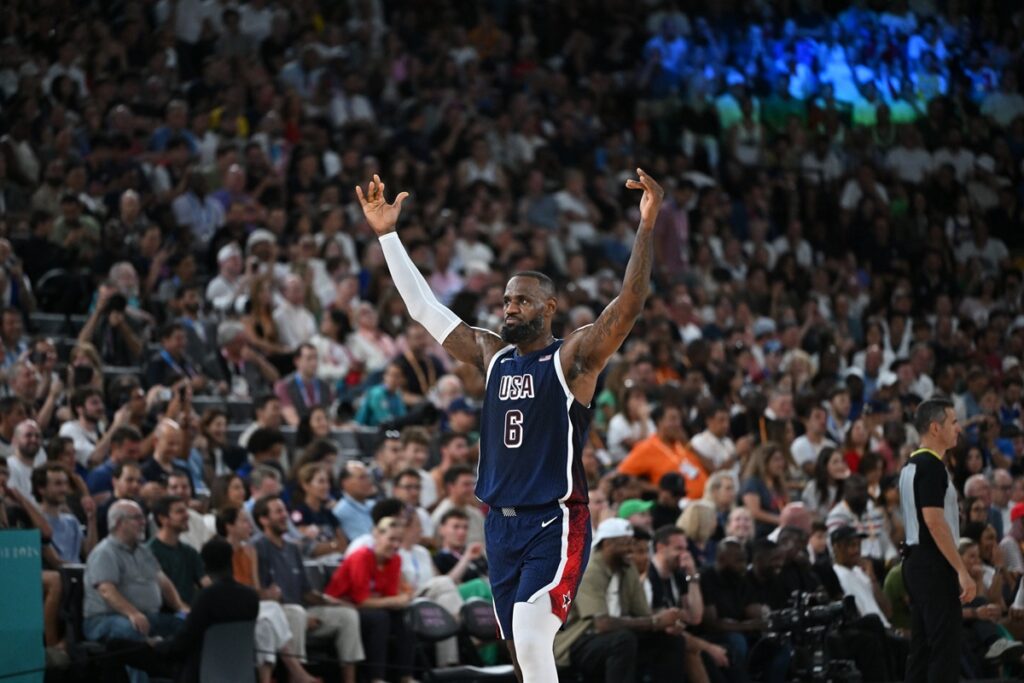

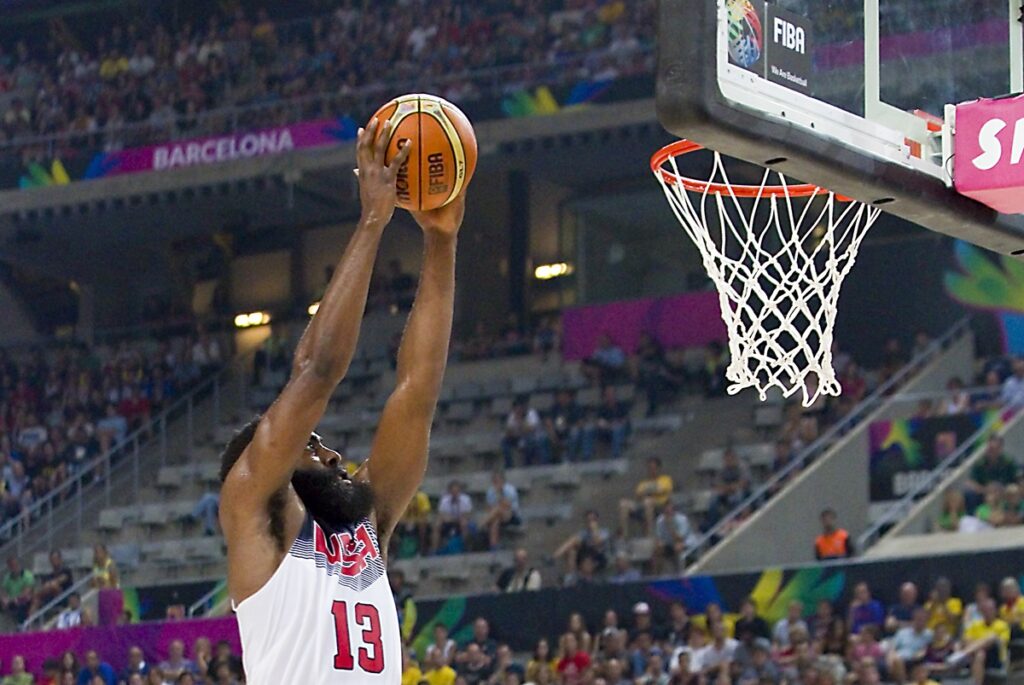
Adam Silver announced a few months ago that the NBA has now officially confirmed it and provided more details about the format. The All-Star Game 2026 will feature a matchup between American players and the best international players. However, to address a concern regarding this “USA vs World” competition, there will be two teams of Americans and one team representing the Rest of the World competing against each other.
A Mini-Tournament with Three Teams
The All-Star Game, scheduled for February 15, 2026, at the Intuit Dome in Inglewood, will no longer be a simple clash between conferences. Three teams, each consisting of eight players, will participate in a round-robin format featuring four mini-games of 12 minutes each.
Teams A and B (USA) will first face off. The winning team will then compete against the World team, followed by the World team playing against the losing team from the initial matchup. The top two teams in the standings—where point differential will serve as a tiebreaker in the event of a tie—will then face each other in a final to determine the champion of the All-Star Game 2026.
⭐️ BRACKET ⭐️ pic.twitter.com/Y8I7RgVqnp
— NBA (@NBA) November 12, 2025
Fan Voting Remains Central
The selection process remains largely unchanged, continuing to include 24 All-Stars, with 12 from the Eastern Conference and 12 from the Western Conference. Five starters from each conference will be determined by fan votes (50%), player votes (25%), and a media panel (25%). Coaches will select seven substitutes from each conference.
Positions will no longer be considered during selection, and the NBA ensures that there will be at least 16 Americans and 8 international players among the selections. If this criterion is not met, Adam Silver has the authority to add players to balance the rosters, potentially exceeding 24 participants.
⭐️ PLAYER SELECTION ⭐️ pic.twitter.com/LcQfUjQKcE
— NBA (@NBA) November 12, 2025
Avoiding Oversights
It is well known that the number of All-Star Game appearances significantly impacts how a player’s level and legacy are evaluated. Similar to other accolades, it also serves as a way to compare (roughly) different eras. With a new format, the goal is to neither facilitate nor hinder access to this status.
A matchup between a USA team and a World team, with each consisting of 12 players, might mean fewer All-Star spots for Americans. Conversely, this could lead to European players being selected despite not yet deserving it. Last season, for example, 5 of the selected players (prior to any withdrawals) were non-Americans, while 19 were Americans. Based on this, it could have resulted in 7 deserving American players being overlooked, with 7 “Rest of the World” players called up despite not being deserving.
With this format, the balance is closer to something equitable (16 and 8), with the potential for greater than 24 selections—not too open-ended either. And, even if one believes that conference legitimacy has decreased, having 12 players from each conference keeps comparisons across eras credible. The level of difficulty to achieve All-Star status remains similar.
A Breath of Fresh Air
This reform answers a desire for renewal following several particularly dull editions. The “USA vs World” format may also capitalize on the rising prominence of international stars like Victor Wembanyama, Nikola Jokic, Giannis Antetokounmpo, Luka Doncic, and Shai Gilgeous-Alexander.
The concept is reminiscent of the NHL’s “4 Nations Face-Off,” which successfully hosted a mini-tournament featuring the United States, Canada, Sweden, and Finland.
Through this initiative, the NBA aims to reignite interest in the All-Star Game and highlight the global aspect of a league that has never been more international.